

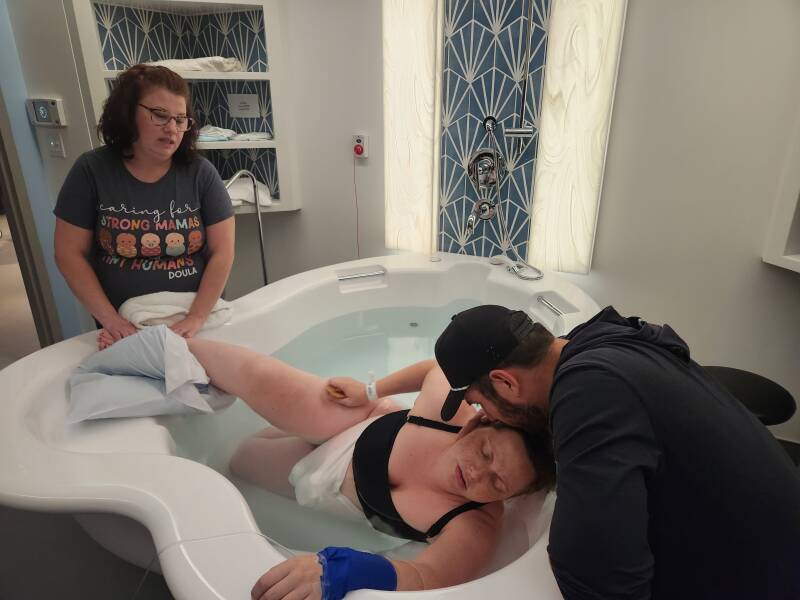
If you're pregnant and starting to think about your birth experience, you may have heard the word doula but still be wondering: What does a birth doula actually do?
A birth doula is a trained professional who provides emotional, physical, and informational support to a birthing person and their partner before, during, and shortly after labor and birth. A doula does not replace your doctor or midwife. Instead, a doula works alongside your medical team to help you feel informed, supported, and confident throughout your birth.
Whether you're planning an unmedicated birth, hoping for an epidural, preparing for a cesarean birth, or simply want someone in your corner, a doula can provide personalized support based on your goals and needs.
1. A Doula Helps You Prepare for Birth
Birth preparation can feel overwhelming, especially if this is your first baby.
Your doula can help you learn about the stages of labor, comfort measures, possible interventions, hospital procedures, and different options you may encounter during birth.
Having information ahead of time can help you feel more confident and prepared when labor begins.
2. A Doula Provides Continuous Emotional Support
Pregnancy, birth and postpartum can bring a lot of emotions. You may feel excited, nervous, overwhelmed, empowered, or even scared—all sometimes within the same hour.
A doula provides a calm, familiar presence throughout the process.
Your doula can encourage you, reassure you, listen to your concerns, and remind you of your strengths when things feel difficult.
3. A Doula Provides Physical Comfort Measures
Doulas have many tools and techniques to help make labor more comfortable.
Depending on your preferences, support may include:
• Position changes
• Movement and walking
• Breathing techniques
• Massage
• Counter-pressure
• Hip squeezes
• Heat or cold
• Birth ball techniques
• Relaxation and visualization
Your doula can help you experiment with different positions and comfort measures as labor progresses.
4. A Doula Supports the Whole Family
A doula isn't there to take the place of your partner.
In fact, one of the benefits of having a doula is that your partner can receive support too.
Labor can be intense for partners. Your doula can suggest ways your partner can participate, demonstrate comfort techniques, offer encouragement, and give your partner an opportunity to take a short break when needed.
You can both have someone supporting you.
5. A Doula Helps You Understand Your Options
Your healthcare providers are responsible for your medical care, but sometimes it's difficult to process information while you're in labor.
A doula can help you slow down and understand what is being discussed.
For example, if your care team recommends an intervention, your doula can help you think through questions you may want to ask your provider.
A doula does not make medical decisions for you or give medical advice. Instead, the goal is to help you feel informed and empowered to communicate with your healthcare team.
6. A Doula Can Help You Feel More Confident
One of the most valuable things a doula provides is reassurance.
You don't have to know exactly what your birth will look like. Birth is unpredictable, and sometimes plans change.
A doula can help you prepare for different possibilities while reminding you that you can still have a positive and supported experience—even when your birth doesn't go exactly according to plan.
7. A Doula Provides Support During Labor at Home or the Hospital
Depending on your individual birth plan and circumstances, your doula may provide support while you're still at home before you leave for your birth location or if you plan to have a homebirth.
This can be especially helpful when you're unsure whether it's time to head to the hospital or birth center. If you are having a homebirth, your doula can help support you while your midwife provides the medical care.
Your doula can help you use comfort measures, movement, breathing, and positioning while you communicate with your healthcare provider about the next steps.
8. A Doula Can Help You Advocate for Yourself
You deserve to understand what's happening during your birth and to have your questions heard.
A doula can encourage you to communicate your preferences and remind you of questions you may want to ask.
Your doula can help you stay connected to your birth preferences while respecting the expertise and role of your medical team.
9. A Doula Supports You When Your Birth Plan Changes
Sometimes birth doesn't go according to plan.
You may decide that you want pain medication after planning an unmedicated birth. You may need an induction. You may experience an unexpected cesarean birth.
None of these things mean that you failed.
A doula can continue providing emotional and physical support while helping you navigate changes and process your experience.
Your birth matters—and so does how you feel throughout it.
10. A Doula Can Continue Supporting You After Birth
The transition into parenthood can be huge.
Your doula may provide early postpartum support, help you process your birth experience, and connect you with additional resources when appropriate.
If breastfeeding is part of your plan, having access to a knowledgeable lactation consultant for breastfeeding support, can also be incredibly valuable during those early days and weeks.
Do I Need a Doula?
There is no one type of person who "needs" a doula.
You might benefit from doula support if you:
• Want continuous emotional support during labor
• Are nervous about giving birth
• Want help preparing for labor
• Want your partner to feel more confident
• Want support with comfort measures
• Are hoping for an unmedicated birth
• Plan to use an epidural
• Are planning an induction
• Have experienced a difficult or traumatic birth
• Simply want an experienced person in your corner
You don't have to have a specific birth plan or reason for wanting a doula.
Sometimes you just want someone who will be there to listen, encourage you, and remind you that you're capable.
When Should You Hire a Doula?
Many families begin looking for a doula during the second trimester, but there isn't one "right" time.
The most important thing is finding someone who feels like a good fit for you and your family.
You want someone you can trust and feel comfortable with during one of the most important experiences of your life.
Looking for a Doula in Ohio?
If you're preparing for birth and looking for compassionate, personalized support, Light & Love Birth and Baby Services is here to support you.
Whether you're preparing for your first baby or adding another little one to your family, you don't have to navigate pregnancy, birth, and early postpartum/parenthood alone.
Postpartum doula support is continued support in the weeks beyond the birth of your baby. Light & Love Birth and Baby Services also provides postpartum doula support. Check out a coming soon blog about postpartum doulas!
Ready to learn more about doula support? Contact Light & Love Birth and Baby Services to schedule a consultation.
Add comment
Comments